Specialties · Surgical recovery
TVshuru Health for surgical recovery
A surgical stay is a sequence of teachable moments — what to expect before the operation, how to manage pain and move afterward, and how to care for the wound at home. A calm bedside screen can guide each step, ease pain along the way, and route the small requests that otherwise pull nurses from the bedside.
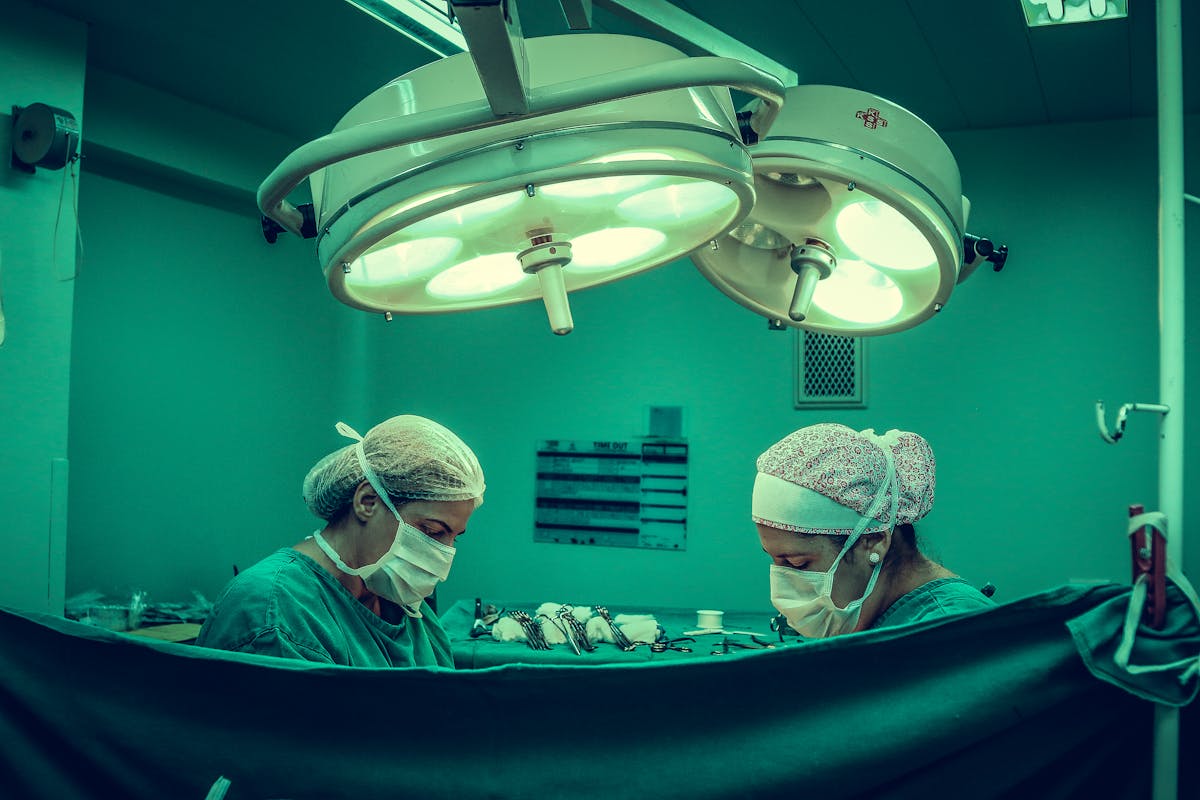
Surgical recovery is unusually structured, and that structure is what makes it a natural fit for bedside engagement. The journey runs on rails — pre-operative preparation, the immediate post-operative window of pain and early mobility, and the education that has to land before a patient can safely go home. At each stage the patient needs the right information at the right moment, and much of the recovery work, from deep breathing to walking to wound care, depends on the patient actually doing it.
Even the surrounding environment shapes surgical outcomes. In Roger Ulrich's classic study, post-operative patients whose windows looked out on nature had shorter hospital stays and needed fewer strong analgesics than those facing a brick wall.1 That finding — that a calmer, more positive environment measurably eases recovery — is part of the rationale for a bedside experience built around reassurance and positive distraction rather than agitation. The same pattern holds for interactive systems: in a review of interactive patient-care technologies, 12 of 13 studies reported improved pain outcomes, and one system was associated with a shorter length of stay of 5.29 versus 6.29 days.2 TVshuru Health is designed to bring that structure and calm to the surgical bedside — complementing the surgical and nursing teams and the certified nurse call system, never replacing them.
Where TVshuru Health helps on a surgical unit
Pre-op preparation & expectations
Clear, calm walkthroughs of what will happen and what recovery will feel like, so patients arrive at surgery informed and less anxious.
Post-op pain guidance & distraction
Guidance on using pain relief well, paired with immersive positive distraction — the kind of intervention that improved pain outcomes in 12 of 13 interactive systems.2
Mobility & spirometry reminders
Timely prompts to get up, walk, and use the incentive spirometer keep patients doing the small, frequent tasks that prevent post-operative complications.
Wound-care education
Step-by-step guidance on caring for the incision and spotting early signs of infection, delivered on a screen the patient can replay at their own pace.4
Discharge instructions & teach-back
Structured discharge education with teach-back to confirm understanding — critical when 78% of patients leave with a comprehension gap in at least one domain.3
Non-urgent request routing
Routing everyday requests through the screen frees nurses for clinical work. A digital-communication trial after orthopedic surgery cut patient-initiated calls from 2.3 to 0.5 per patient.5
The goal on a surgical unit: guide the patient through every stage — pre-op to confident discharge — with calm education, pain support, and mobility prompts, while routing the non-urgent requests that otherwise interrupt nursing care, all without replacing the surgical team or the nurse call system.
Why comprehension and communication drive recovery
Two problems consistently undermine surgical discharge: patients do not understand their instructions, and they cannot easily reach the team with small questions. On the first, the evidence is sobering — 78% of patients in one study had deficient comprehension of their care or instructions in at least one domain, and most did not realize it.3 Teach-back, in which the patient restates the plan in their own words, is the recommended remedy, and it is far easier to run consistently when the education itself is delivered on the bedside screen. Digital delivery helps the material land in the first place: patients given bedside digital education understood their condition markedly better than those given paper — 85.3% versus 59.0%.4
On the second problem, better communication channels reduce both interruptions and anxiety. A randomized trial of team-based digital communication after orthopedic surgery cut patient-initiated calls from 2.3 to 0.5 per patient and improved satisfaction, with most patients naming the digital channel their favorite way to reach the team.5 For a surgical unit, that means fewer non-urgent interruptions pulling nurses away from clinical work, and patients who feel more, not less, supported — a channel that sits alongside, and never replaces, the certified nurse call system for anything urgent.
Sources and further reading
- Ulrich RS. View through a window may influence recovery from surgery. Science, 1984. science.org/doi/10.1126/science.6143402
- Interactive patient care systems: pain and length of stay. Applied Clinical Informatics, 2019. pmc.ncbi.nlm.nih.gov/articles/PMC6693998
- Engel KG, et al. Patient comprehension of emergency department care and instructions. Annals of Emergency Medicine, 2009. pubmed.ncbi.nlm.nih.gov/18619710
- Bedside tablet education versus paper handouts. JMIR mHealth and uHealth, 2020. pmc.ncbi.nlm.nih.gov/articles/PMC7785403
- Jensen CB, et al. Team-based digital communication after orthopedic surgery. Acta Orthopaedica, 2024. pmc.ncbi.nlm.nih.gov/articles/PMC11100491
For surgical & peri-operative units
Guide patients from pre-op to confident discharge
We will map TVshuru Health to your surgical pathways, ERAS protocols, and discharge teach-back workflow.