Infection control
Infection control and the high-touch bedside: cleanable interfaces
The most-touched object in the patient room is also, by measurement, one of the dirtiest: the television remote control. If the bedside screen is going to become a genuine part of care, its interface has to be designed for a hospital's infection-control reality — wipeable surfaces, per-admission clearing, and a way to move private actions onto the patient's own phone.
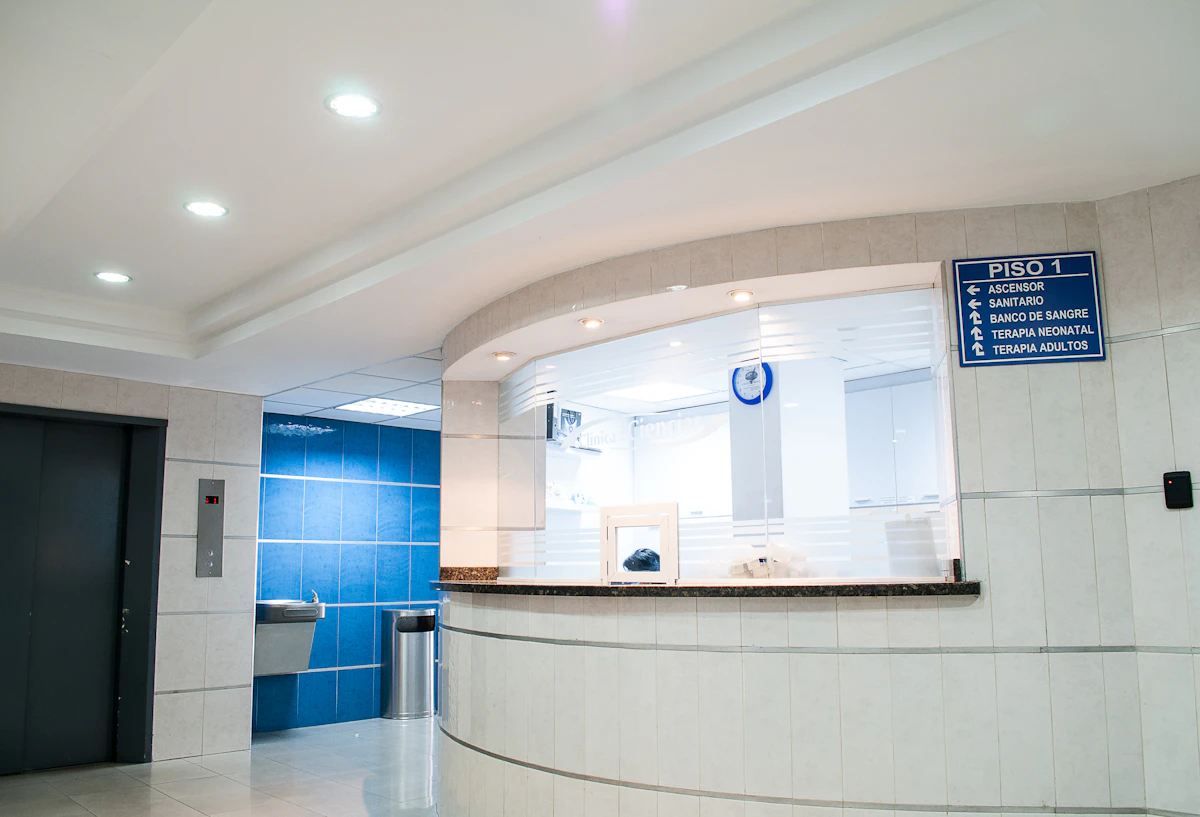
Ask an infection-prevention team where the risk hides in a patient room, and they will not point at the floor or the walls. They will point at the small, shared, frequently handled objects that everyone touches and no one is quite responsible for cleaning between uses: bed rails, call buttons, tray tables — and, near the top of every list, the television remote. It is passed from patient to patient across admissions, handled with unwashed hands, dropped into bedding, and rarely wiped down with the diligence a high-touch surface deserves. For a company that wants to put a screen at the center of the patient experience, that is not a detail to gloss over. It is a design constraint to build around.
The remote is the dirtiest thing in the room
The evidence here is unusually clean, so to speak. In a widely cited study of hospital-room contamination, the television remote control turned out to be the most contaminated surface in the patient room, carrying roughly 320 bacteria on average compared with about 91 on other surfaces sampled — and, strikingly, MRSA was found only on the remotes.1 The remote is the perfect vector: small enough to be handled constantly, textured with buttons and seams that trap organisms, personal enough that staff hesitate to treat it as a cleaning target, and shared across every patient who occupies the bed. A device designed for the living room ends up being one of the least hygienic things in a space where hygiene is a clinical priority.
The uncomfortable irony: the object hospitals hand patients to control their entertainment is, by measurement, one of the objects most likely to carry the organisms infection-control programs spend the most effort trying to contain.
Cleaning helps — but the surface keeps coming back
The obvious answer is to clean the remote, and hospitals do. The uncomfortable finding is that routine disinfection is not enough to keep high-touch surfaces clear. In a 2022 study of hospital high-touch surfaces, sampling found 60 distinct types of organism persisting despite routine disinfection, and 29 of those matched organisms isolated from patients — direct evidence that these surfaces are not just dirty in the abstract, but are sharing microbial traffic with the people being treated.2 The lesson is not that cleaning is pointless; it is that cleaning is a continuous battle against recontamination, and every high-touch object you add to a room is another front in that battle. The fewer shared, hard-to-clean surfaces a patient has to touch to get what they need, the easier the battle becomes.
Why this matters: the stakes of a single touch
It would be easy to treat all of this as fastidiousness if healthcare-associated infections were rare. They are not. On any given day, roughly 1 in 31 hospital patients has a healthcare-associated infection — about 3.2% of inpatients at any moment.3 No single contaminated remote causes that figure, and no interface design will erase it. But HAIs are a problem of accumulated small risks — hands, surfaces, devices, transfers — and the shared bedside remote is one of those small risks that a hospital touches thousands of times a day across a ward. Reducing the number of shared-surface contacts a patient must make is a legitimate, if modest, contribution to a layered defense.
It is worth being precise about why the remote is a worse offender than most surfaces. A bed rail or a tray table is wiped as part of a visible, routine cleaning circuit; a remote is small, mobile, and easy to overlook — it migrates under a pillow, onto the floor, into a visitor's hand and back again, so even a conscientious cleaning protocol struggles to keep track of it. It also sits at the intersection of two things infection-prevention teams worry about most: a texture that is hard to disinfect thoroughly, and a handling pattern that is close to constant. That combination is exactly what makes it show up at the top of contamination studies, and exactly what makes it a good target for design rather than for yet more cleaning effort.
Designing the bedside for infection control
If you accept the remote as a liability rather than a neutral accessory, three design principles follow directly.
Favor wipeable, cleanable interfaces. Any physical control that stays in the room should be built to be disinfected: smooth, sealed surfaces without deep button wells or fabric, compatible with the disinfectant wipes a hospital already uses, and simple enough that cleaning it is a quick, obvious step in room turnover rather than a fiddly chore that gets skipped. The interface on the screen should assume the physical control is cleaned often and designed to survive it.
Clear the platform per admission. An infection-control mindset is also a data-hygiene mindset. When one patient is discharged and the next arrives, the bedside platform should reset completely — no lingering personal information, preferences, messages, or session state from the previous occupant. Per-admission clearing is partly a privacy discipline, but it mirrors the physical practice of terminal cleaning: the room is returned to a known-clean baseline for the next patient, and the software should be too.
Let patients use their own phone via QR handoff. The single most effective way to reduce contact with a shared surface is to route private, high-frequency actions onto a device the patient already owns and no one else touches. A QR code on the screen lets a patient pick up a private task — reading their information, sending a request, adjusting settings, making a video call — on their own phone, which never leaves their hand and never crosses to the next admission. Patients take to this readily: in a study of older inpatients, about three-quarters chose video calls when offered, and video reduced anxiety and fear of death compared with the telephone.6 And moving interactions onto a digital channel demonstrably changes behavior at scale: a team-based digital communication tool cut patient-initiated calls from an average of 2.3 to 0.5 per patient, with the digital channel named the favorite by 91% of patients.4 Fewer shared-surface touches is the infection-control dividend of that shift.
None of this comes at the expense of the platform's core value. The reasons hospitals want an interactive bedside surface in the first place — engaging patients through access to information about their own care, delivering education that improves comprehension, supporting comfort and distraction — are unchanged.5 Bedside education delivered on a guided interface improves patient understanding compared with paper,7 and nurses see interactive patient technology as something that can enhance their practice and support care.8 Designing that platform to minimize shared-surface contact simply means delivering the same value while adding, rather than subtracting, from the ward's infection-control posture.
The honest caveat: design reduces risk, it does not eliminate it
It would be dishonest to suggest that a cleanable interface or a QR handoff prevents infections. It does not. No interface — however smooth, however private, however clever — replaces the two interventions that actually control healthcare-associated infection: rigorous environmental cleaning and hand hygiene. Those are the foundation, and they are irreplaceable. What thoughtful bedside design can do is shrink one of the many surfaces that make that foundation harder to maintain: it removes some shared-surface touches, it makes the physical controls that remain easier to disinfect, and it resets cleanly between patients. That is a genuine contribution to a layered defense, offered with clear eyes about its size. It reduces risk at the margin; it does not eliminate it.
That framing is deliberate. TVshuru Health is a patient-engagement platform, not a medical device or an infection-control product, and it is built to complement clinical care and existing infection-prevention practice, never to substitute for it. The bedside screen should make the patient's stay easier and the ward's job a little cleaner. Done honestly, it can do both — and the first step is to stop pretending the shared remote is harmless.
Sources and further reading
- Gerba C, et al. Television remote control found to be the most contaminated surface in the patient room (~320 bacteria vs 91; MRSA only on remotes). Infection Control Today, 2005. infectioncontroltoday.com
- High-touch hospital surfaces harbored 60 distinct organism types despite routine disinfection; 29 matched clinical isolates. American Journal of Infection Control, 2022, via CIDRAP. cidrap.umn.edu
- Health Care-Associated Infections: about 1 in 31 hospital patients has an HAI on any given day (~3.2%). AHRQ PSNet Primer. psnet.ahrq.gov/primer/health-care-associated-infections
- Jensen NK, et al. Team-based digital communication cut patient-initiated calls (2.3 to 0.5 per patient); digital channel favored by 91%. Acta Orthopaedica, 2024. pmc.ncbi.nlm.nih.gov/articles/PMC11100491
- Roberts S, et al. Using technology to engage hospitalised patients in their care: a realist review. BMC Health Services Research, 2017. pmc.ncbi.nlm.nih.gov/articles/PMC5461760
- Dürst AV, et al. Video calls reduced anxiety and fear of death versus telephone in older inpatients (SILVER study; 73.5% chose video). Aging Clinical and Experimental Research, 2022. pmc.ncbi.nlm.nih.gov/articles/PMC9261146
- Integrated Digital Patient Education at the Bedside for Patients with Chronic Conditions. JMIR mHealth and uHealth, 2020. pmc.ncbi.nlm.nih.gov/articles/PMC7785403
- Interactive patient engagement technology (iPET) perceived by nurses to enhance practice and support care. Journal of Medical Internet Research, 2016. jmir.org/2016/11/e298
Plan your bedside pilot
A bedside platform your infection-control team can live with
Share your unit details and a TVshuru Health specialist will suggest a bedside flow designed for cleanability — wipeable controls, per-admission clearing, and phone handoff via QR — that fits your infection-prevention practice and workflows.