Family connection
Keeping families connected with bedside video visits
A patient in a hospital bed cannot walk to a family lounge to take a call. Bringing the video visit to the bedside screen turns family presence from a logistical problem into a clinical comfort — one with a measurable effect on anxiety.
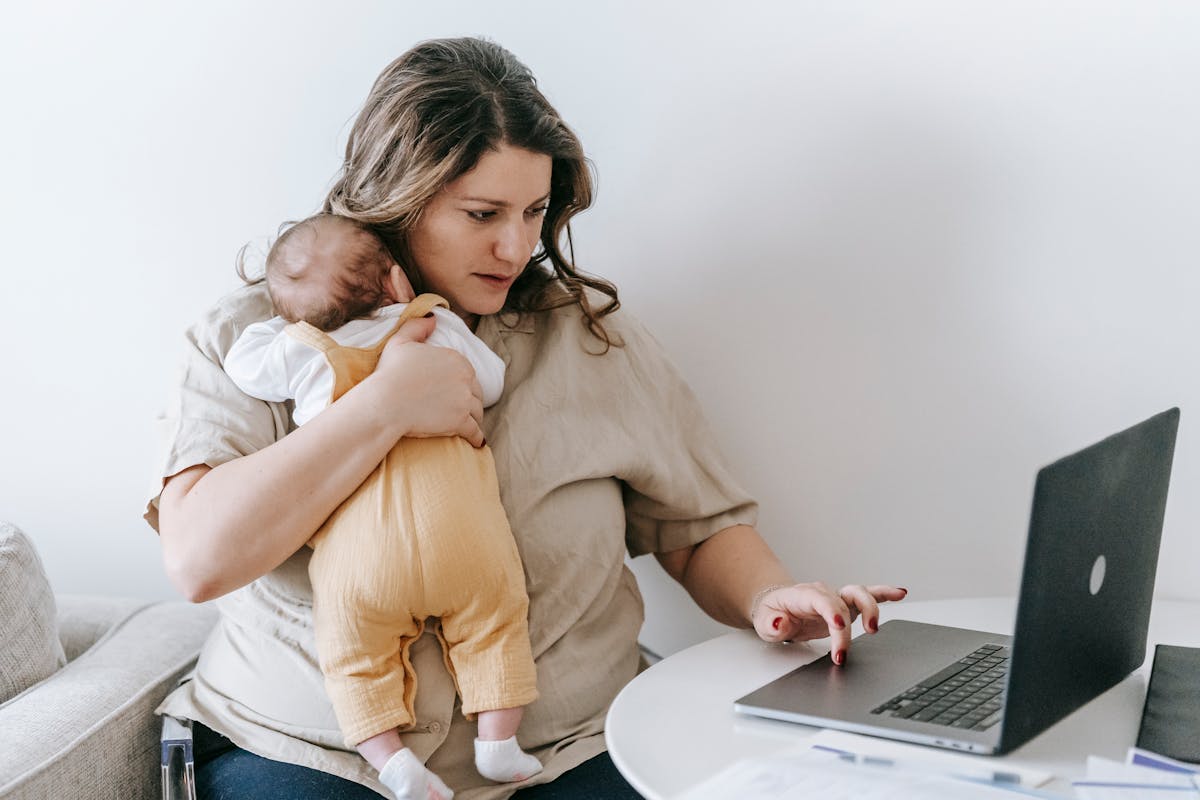
Illness is isolating in a way that is easy to underestimate from outside the room. Visiting hours are limited, families work and live at a distance, and the patients who most need company are often the ones least able to receive it — too unwell to travel to a visitor's lounge, confined by an isolation protocol, or simply too tired to hold a phone for long. The result is a quiet but consistent theme in patient-experience research: hospitalized people are frequently bored, lonely, and worried about the people they have left at home. Connection is not a luxury layered on top of clinical care. It is part of how a patient copes with being ill.
The environmental-psychology literature makes this explicit. When researchers set out to explain why some hospital rooms reduce patient stress more than others, they identified three mechanisms: a sense of control, positive distraction, and social support.1 Social support — feeling connected to the people who care about you — sits alongside the physical comforts of the room as a driver of recovery. The question for a modern hospital is not whether connection matters, but how to deliver it when the family cannot always be in the room.
Video visits do more than a phone call
The most direct evidence comes from a study designed to test exactly this substitution. In the SILVER trial, older hospitalized adults who connected with family by video call — rather than by telephone alone — reported lower anxiety and less fear of a loved one dying.2 Notably, when patients were offered the choice, 73.5 percent chose video over a phone call.2 Seeing a familiar face, it turns out, does something a voice alone does not: it reassures in a way that words cannot, and patients recognise the difference and reach for it.
The finding that matters: for older inpatients, a video visit lowered anxiety and the fear of a loved one's death compared with phone-only contact — and when given the option, most patients chose video.
The pandemic turned this from a nicety into a necessity and, in doing so, produced a natural experiment. When in-person visiting was suspended, intensive-care units stood up structured virtual-visiting programmes so that families could remain present at the bedside of critically ill and often unconscious patients.3 Those programmes demonstrated something that outlasts the emergency that created them: a screen at the bed can carry family presence into the most acute corners of the hospital, where physical visiting is hardest and connection is needed most.
The patients who need it most cannot come to the phone
The case for putting the visit on the bedside screen — rather than expecting the patient to manage a personal device — is sharpest for the patients who are the most confined. Consider protective isolation, where oncology patients with compromised immune systems may spend weeks in a single room with tightly restricted visiting. In one study of these patients, 61.1 percent reported boredom, and in-room media was central to how they coped: television was the most common pastime, named by 72.2 percent.4 These are patients who cannot walk down the corridor to meet a visitor and cannot fill the days on their own. For them, a large, easy-to-use screen that already sits in front of the bed is not a convenience — it is the practical route to the outside world.
This is the ergonomic argument for the bedside screen specifically. A personal phone is small, easily dropped, quickly out of charge, and hard to manage for a patient who is weak, elderly, or attached to lines and monitors. The screen on the wall is large, always powered, and controllable from the bed. Anxiety and distress are unevenly distributed toward exactly the patients least able to operate a handset — which is precisely why the connection channel should meet them where they already are.
An honest caveat: connection helps, but it is not a cure
It would overstate the evidence to claim that any digital connection reliably resolves a patient's worry. A trial of a digital SMS-based communication service in maternity care found it was only non-inferior to usual care for maternal worry, while maintaining satisfaction at around 75 percent.5 In other words, the digital channel was well tolerated and did no harm to reassurance — but it did not, on its own, drive worry down further than standard care. The honest reading is that connection technology is a genuine comfort and a well-accepted one, not a substitute for the human contact, clinical reassurance, and skilled communication that anxious patients and families ultimately need. A video visit does not replace a nurse's update or a doctor's conversation; it complements them.
That framing keeps the promise realistic. Bringing family video to the bedside will not fix loneliness or dissolve fear by itself. What it does is remove the friction that keeps families apart when a patient is too unwell to bridge the gap alone — and the best available evidence says that when families do connect by video, patients feel less anxious and less afraid.2 Set against the backdrop of how prevalent anxiety and low mood are among inpatients,6 that is a meaningful comfort to be able to offer reliably.
TVshuru Health is built to make that connection effortless from the bed, using the screen the patient already knows how to use. It does not replace the nurse, the physician, or the certified nurse call system, and it is not a medical device. It simply makes sure that when a patient cannot go to their family, their family can come to them — on the largest, simplest interface in the room.
Sources and further reading
- Do hospital rooms make a difference for patients' stress? Role of perceived control, positive distraction, and social support. Journal of Environmental Psychology, 2017. sciencedirect.com
- Dürst AV, et al. Video calls to reduce anxiety and fear in hospitalized older adults (SILVER). Aging Clinical and Experimental Research, 2022. pmc.ncbi.nlm.nih.gov/articles/PMC9261146
- Virtual visiting in intensive care during the COVID-19 pandemic. 2022. pmc.ncbi.nlm.nih.gov/articles/PMC9058291
- Patients' experiences of protective isolation: boredom and in-room media use in haematology-oncology. IJHOSCR, 2017. pmc.ncbi.nlm.nih.gov/articles/PMC5767293
- A digital SMS-based communication service in maternity care: non-inferiority for maternal worry. PLoS One, 2021. pmc.ncbi.nlm.nih.gov/articles/PMC8064599
- The prevalence, grouping, and distribution of stressors and their association with anxiety among hospitalized patients. PLOS ONE, 2021. journals.plos.org
Plan your bedside pilot
Bring family video visits to the bed
Share your unit details and a TVshuru Health specialist will suggest a bedside connection flow — family video visits from the screen the patient already uses — that fits your visiting policies and workflows.