Patient experience
Why the bedside television is becoming a patient engagement platform
The screen at the patient's bed has been the most under-used device in the hospital room for decades. Used well, it can become the easiest place for patients to understand their care, ask for what they need, stay comfortable, and stay connected — with a growing evidence base behind each of those jobs.
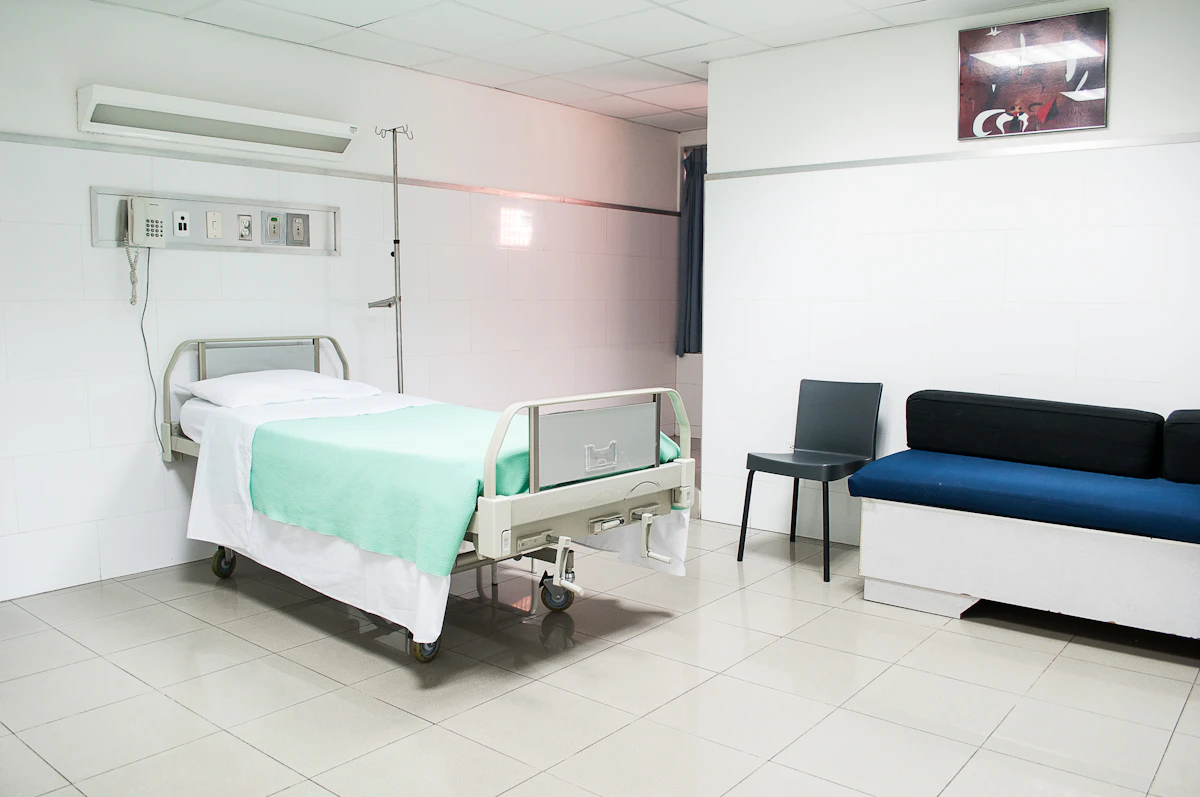
Hospitals invest heavily in the patient room — the bed, the monitoring, the nursing hours — yet the largest interactive surface in that room, the television, has stayed frozen in the era of broadcast channels and a laminated menu card. Meanwhile, the moments that shape a patient's stay pile up around it: not understanding what tomorrow holds, waiting for someone to answer a call light for a cup of water, missing a family member who cannot visit, or lying awake anxious at 2 a.m. Each of those is an engagement problem, and each is one the bedside screen is unusually well placed to help solve.
The shift now under way is to treat that screen not as entertainment plumbing but as a patient engagement platform: a single, calm place where a patient can see their care plan, order a meal, ask for non-urgent help, watch education their nurse selected for them, relax, and video call family. The case for making that shift is not a hunch — it rests on a decade of research into patient activation, the patient experience, and interactive bedside technology specifically.
Engagement is not a soft metric — it tracks outcomes and cost
The most important idea behind patient engagement is activation: the knowledge, skills, and confidence a person has to manage their own health. The Patient Activation Measure (PAM), developed and validated by Judith Hibbard and colleagues, made activation measurable.1 What followed was evidence that it matters. In a study of more than 30,000 patients, those with higher activation in 2010 had better results on 9 of 13 health outcomes and lower costs two years later — and when a patient's activation level changed, their outcomes and costs moved in the same direction.2 The most-activated patients were projected to cost about 31% less than the least-activated.3
Clinicians see the same thing from the inside. In an NEJM Catalyst survey of health-care leaders, 90% said patient engagement has a major or moderate impact on quality of care and 75% said the same for cost — yet respondents estimated only about a third of patients are truly engaged.4 That gap, between how much engagement matters and how little of it hospitals actually achieve, is the opening a bedside platform is built to fill.
The practical goal: move more patients from passive recipients to active participants in their own care — during the admission, while there is a screen in front of them and a care team down the hall.
The room itself affects recovery — and the screen is part of the room
That a hospital environment shapes clinical outcomes is one of the older findings in the field. In Roger Ulrich's classic 1984 study, surgical patients in rooms with a window view of trees had shorter postoperative stays, needed fewer strong painkillers, and drew fewer negative comments from nurses than matched patients who faced a brick wall.5 Later environmental-psychology work framed the mechanisms: patients recover better when the room gives them a sense of control, offers positive distraction, and supports social connection — and it named the patient-controllable television as one of the levers for all three.6
The catch is that the default hospital television can work against those goals. Clinicians who study acute care warn that medicated, semi-conscious, or anxious patients perceive standard broadcast programming through "pain, fear, and stress," and that content they cannot fully follow can be "alarming, confusing, and agitating" — especially through the long hours of the night.7 Stress and anxiety are not rare in the hospital; they are close to universal, and studies catalog how many distinct stressors patients face and how tightly they connect to anxiety.8 A purpose-built, calm interface — one the patient controls, with content chosen for them — turns the same hardware from a stressor into a source of the control and positive distraction the evidence favors.
Interactive bedside systems: what the studies actually show
The strongest evidence is not about screens in the abstract but about interactive patient systems specifically. On patient education, an observational study of 178 patients with chronic conditions compared tablet-based bedside teaching with printed material. The bedside group was far more likely to say they definitely understood their condition (85.3% vs 59.0%), felt motivated to care for themselves at home (77.6% vs 48.4%), and were very likely to follow their doctor's instructions (79.3% vs 40.3%) — every difference statistically significant.9
On comfort, a systematic review of 18 studies of patient interactive systems for pain found that 12 of the 13 systems measuring pain scores improved them, with virtual-reality distraction showing significant reductions in most trials.10 And on the patient experience itself, a realist review distilled how bedside technology engages hospitalized patients — chiefly by giving them access to information about their own care, which empowers them to participate more actively.11
Honesty about the evidence matters, because it is what makes the strong findings credible. Not every deployment succeeds. A JAMIA editorial cautioned that patient portals and similar tools have not consistently improved empowerment, outcomes, or cost, and that "one size does not fit all."12 The most instructive case is Cincinnati Children's, which used an interactive TV system to ask families a daily experience question and gathered more than 41,000 responses. Units that acted on negative feedback improved their experience scores; units that merely collected the feedback did not.13 The lesson is that a bedside platform is not magic hardware — it is a channel that pays off only when it is wired into how the ward actually works.
Four jobs the bedside screen is uniquely suited to
- Understanding. Prescribed education, the care plan, and a plain-language view of "what happens today" — where comprehension gains are largest.9
- Asking. Non-urgent requests — water, a blanket, a question about a meal — routed to the right team instead of the call light.
- Comfort. Patient-controlled entertainment and relaxation content that provides the positive distraction and sense of control the environment literature rewards.6
- Connection. Family video calls from the bed, which reduce anxiety for isolated patients and keep caregivers involved in the care.
None of this replaces the nurse, the physician, or the certified call system. It reserves them for the work that needs a human, and gives the patient a calm, capable interface for everything else. That is why the most under-used device in the hospital room is quietly becoming one of its most important — and why TVshuru Health is built to make the bedside screen do these four jobs well.
Sources and further reading
- Hibbard JH, et al. Development of the Patient Activation Measure (PAM). Health Services Research, 2004. pmc.ncbi.nlm.nih.gov/articles/PMC1361049
- Greene J, Hibbard JH, et al. When Patient Activation Levels Change, Health Outcomes and Costs Change, Too. Health Affairs, 2015. pubmed.ncbi.nlm.nih.gov/25732493
- Activated patients cost 31% less (summary of Greene/Hibbard 2015). Oneview Healthcare, 2015. oneviewhealthcare.com
- NEJM Catalyst. Patient Engagement Survey: Improved Engagement Leads to Better Outcomes, 2017. catalyst.nejm.org
- Ulrich RS. View Through a Window May Influence Recovery from Surgery. Science, 1984. science.org/doi/10.1126/science.6143402
- Do hospital rooms make a difference for patients' stress? Role of perceived control, positive distraction, and social support. Journal of Environmental Psychology, 2017. sciencedirect.com
- Mazer S. How Hospital Television Impacts Acute Care Patients. Healing HealthCare Systems. healinghealth.com
- The prevalence, grouping, and distribution of stressors and their association with anxiety among hospitalized patients. PLOS ONE, 2021. journals.plos.org
- Integrated Digital Patient Education at the Bedside for Patients with Chronic Conditions. JMIR mHealth and uHealth, 2020. pmc.ncbi.nlm.nih.gov/articles/PMC7785403
- The Impact of Patient Interactive Systems on the Management of Pain in an Inpatient Hospital Setting: A Systematic Review. Applied Clinical Informatics, 2019. pmc.ncbi.nlm.nih.gov/articles/PMC6693998
- Roberts S, et al. Using technology to engage hospitalised patients in their care: a realist review. BMC Health Services Research, 2017. pmc.ncbi.nlm.nih.gov/articles/PMC5461760
- Interactive systems for patient-centered care to enhance patient engagement. JAMIA, 2016. pmc.ncbi.nlm.nih.gov/articles/PMC7814929
- Use of Daily Web-Based, Real-Time Feedback to Improve Patient and Family Experience. Journal of Patient Experience, 2024. pmc.ncbi.nlm.nih.gov/articles/PMC11005486
Plan your bedside pilot
Turn the screen at the bed into an engagement platform
Share your unit details and a TVshuru Health specialist will suggest a bedside engagement flow — education, requests, comfort, and family connection — that fits your workflows.