Dining & nutrition
Room-service dining at the bedside: nutrition, waste, and satisfaction
Let patients order the meals they want, when they are ready to eat, from the screen in front of them, and three things tend to happen at once: less food goes in the bin, more nutrition goes into the patient, and satisfaction climbs. It is one of the clearest returns on an interactive bedside platform.
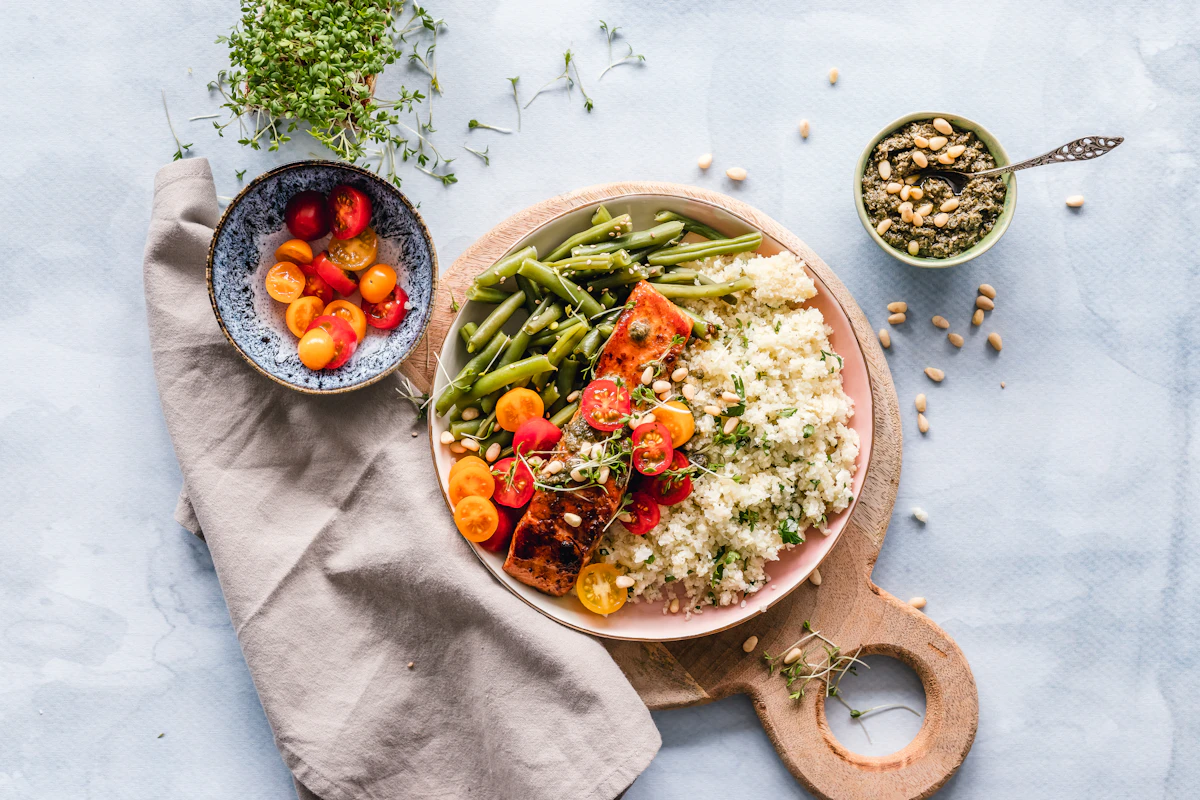
The traditional hospital meal service is built for the kitchen, not the patient. Trays are plated on a fixed schedule from a menu chosen a day earlier, then delivered whether or not the patient is awake, hungry, off the ward for a scan, or too nauseated to eat. The result is predictable: food arrives at the wrong moment, much of it comes back untouched, and the patient's actual intake quietly falls short of what recovery requires. A day-ahead menu also asks patients to guess how they will feel tomorrow — a poor bet in a setting where appetite, nausea, and test schedules can turn over hour to hour. On-demand "room service" ordering — where the patient selects meals from a menu and requests them when ready — was designed to fix exactly that mismatch, and the bedside screen is the natural place to put it: the interface is already in the room, already in front of the patient, and already the surface they use for education, comfort, and requests.
The evidence: less waste, more intake, happier patients
The clearest single study of the model is McCray and colleagues' evaluation of a hospital room-service system. Switching from a traditional cook-serve model to on-demand ordering cut mean plate waste from 29% to 12% and reduced per-patient meal cost by 15%.1 Those two numbers alone make the operational case — the same food budget feeds patients rather than the disposal stream.
But the nutrition result is the one that should get a clinician's attention. Under room service, mean energy intake rose from 1,306 to 1,588 kcal per patient per day, and protein intake climbed from 52 to 66 grams per day — meaningful gains for people trying to heal, hold onto muscle, and mount an immune response.2 Patient-reported food satisfaction moved in the same direction, rising from the 68th to the 86th percentile on Press Ganey benchmarking.2 Less waste, more nutrition, and higher satisfaction are not usually available from the same intervention; here they arrive together, because they share a cause — letting people eat what they want when they are ready.
Why it works: waste, intake, and satisfaction are all downstream of the same mismatch — a fixed tray schedule meeting a patient on their own unpredictable timetable. Fix the timing and the choice, and all three improve at once.
Why intake is a clinical problem, not a hospitality one
It is easy to treat food as amenity. The malnutrition data argue it is medicine. Disease-related malnutrition affects roughly 20% to 50% of hospitalized patients — around 40% in the acute setting — and is associated with substantially higher mortality than being well-nourished.3 Worse, the hospital stay itself can make nutrition go backward: about one-third of patients who are well-nourished on admission become malnourished during their stay.4 Missed meals, poorly timed trays, and food a patient does not want are not neutral events — they are how a recoverable admission drifts toward a longer, more complicated one.
Against that backdrop, an intervention that reliably raises energy and protein intake is doing clinical work. It will not replace a dietitian's assessment or supplemental nutrition where those are indicated, but it changes the baseline: the default meal becomes one the patient actually eats. Nutrition is one of the few daily inputs to recovery a patient controls directly, and every plate that goes back full is a small, repeatable setback — protein not laid down, calories not banked against the metabolic cost of illness. Shifting the plate-waste figure from 29% to 12% is therefore not only a catering statistic; over a stay of several days, it is the difference between a patient who is being fed on paper and one who is being fed in fact.1
The workflow dividend: getting dietary questions off the call light
There is a second, quieter benefit that matters to nursing. A large share of call-light activity is non-clinical or basic-care requests — assistance, comfort, and questions rather than emergencies — and this volume competes for nurses' attention with the work only they can do.5 "Can I get a different lunch?" or "Is there something without dairy?" are real needs, but they do not require a registered nurse to solve. When a bedside platform lets those non-urgent dietary requests route directly to the kitchen or the dietary team, the request reaches the person who can actually act on it, and the call light is preserved for care.
Nurses and patients both value this kind of granular routing — sending each request to the right destination rather than funneling everything through one undifferentiated call button.6 A meal-ordering screen is one of the easiest requests to route well, because the destination is unambiguous: food service, not the nurses' station. It also removes a category of interruption that tends to accumulate at exactly the wrong times — mid-medication round, mid-assessment — when a patient decides they are finally hungry. Handled on the screen, that request never becomes a call light at all; it becomes an order the kitchen receives directly, timed to when the patient is actually ready to eat rather than to when a nurse happened to be free to relay it.
Choice, dignity, and control
The softer benefit is real too. Environmental-psychology research on hospital rooms identifies a patient's sense of control as one of the mechanisms that reduces stress and supports recovery.7 Few decisions in a hospital stay are as tangible — or as regularly reaffirmed — as choosing your own meal. Three times a day, an on-demand menu hands the patient a small, genuine choice at a moment when most other choices have been taken away. That is part of why satisfaction rises alongside the operational numbers.
Delivering the menu on the same screen the patient already uses for education and requests also helps with access. A digital menu can carry clear descriptions, filter by allergen or therapeutic diet, and support larger text and screen-reader output for patients who need it — a better fit for a diverse inpatient population than a single printed card. And because the ordering interface can reinforce dietary education at the point of choice, it supports the same comprehension gains seen when patients receive tailored information on the bedside screen rather than on paper.8
The honest caveat
Room service is not a free lever. It depends on kitchen capacity, extended service hours, and staff who can prepare and deliver on demand rather than in one timed push; the published cost savings assume the operational model is actually implemented, not just the ordering screen. A tablet or TV that takes orders the kitchen cannot fulfill on a flexible schedule will frustrate patients rather than help them. The screen is the front door to room-service dining; the kitchen workflow behind it has to be built to match. Where that alignment exists, bedside meal ordering is among the most reliably positive features a hospital can add.
None of this replaces clinical nutrition management, the dietitian, or the nurse call system — TVshuru Health is a patient-engagement platform, not a medical device. What bedside on-demand ordering does is turn the daily necessity of eating into one of the clearest wins on the screen: less waste, more nutrition, and a patient who is more satisfied and better fed.
Sources and further reading
- McCray S, et al. Room Service Improves Nutritional Intake and Increases Patient Satisfaction While Decreasing Food Waste and Cost (plate waste 29%→12%; meal cost −15%). Journal of the Academy of Nutrition and Dietetics, 2018. pubmed.ncbi.nlm.nih.gov/28676228
- McCray S, et al. Room service and nutritional intake (energy 1,306→1,588 kcal/day; protein 52→66 g/day; Press Ganey food satisfaction 68th→86th percentile). Journal of the Academy of Nutrition and Dietetics, 2018. pubmed.ncbi.nlm.nih.gov/28676228
- Barker LA, et al. Hospital Malnutrition: Prevalence, Identification and Impact (~20–50% of inpatients; ~40% acute; higher mortality). International Journal of Environmental Research and Public Health, 2011. pmc.ncbi.nlm.nih.gov/articles/PMC3084475
- Cass AR, et al. Prevalence of hospital-acquired malnutrition and modifiable determinants (~one-third of well-nourished patients become malnourished during admission). Journal of Human Nutrition and Dietetics, 2022. pmc.ncbi.nlm.nih.gov/articles/PMC9790482
- Tzeng H-M. Perspectives of staff nurses on the reasons for and nature of patient-initiated call lights (top reasons are non-clinical/basic care). BMC Health Services Research, 2010. pubmed.ncbi.nlm.nih.gov/20184775
- Galinato J, et al. Perspectives of Nurses and Patients on Call Light Technology (value of granular request routing). CIN: Computers, Informatics, Nursing, 2015. pmc.ncbi.nlm.nih.gov/articles/PMC4546527
- Do hospital rooms make a difference for patients' stress? Role of perceived control, positive distraction, and social support. Journal of Environmental Psychology, 2017. sciencedirect.com
- Integrated Digital Patient Education at the Bedside for Patients with Chronic Conditions. JMIR mHealth and uHealth, 2020. pmc.ncbi.nlm.nih.gov/articles/PMC7785403
Plan your bedside pilot
Turn the screen at the bed into an engagement platform
Share your unit details and a TVshuru Health specialist will suggest a bedside engagement flow — education, requests, comfort, and family connection — that fits your workflows.